
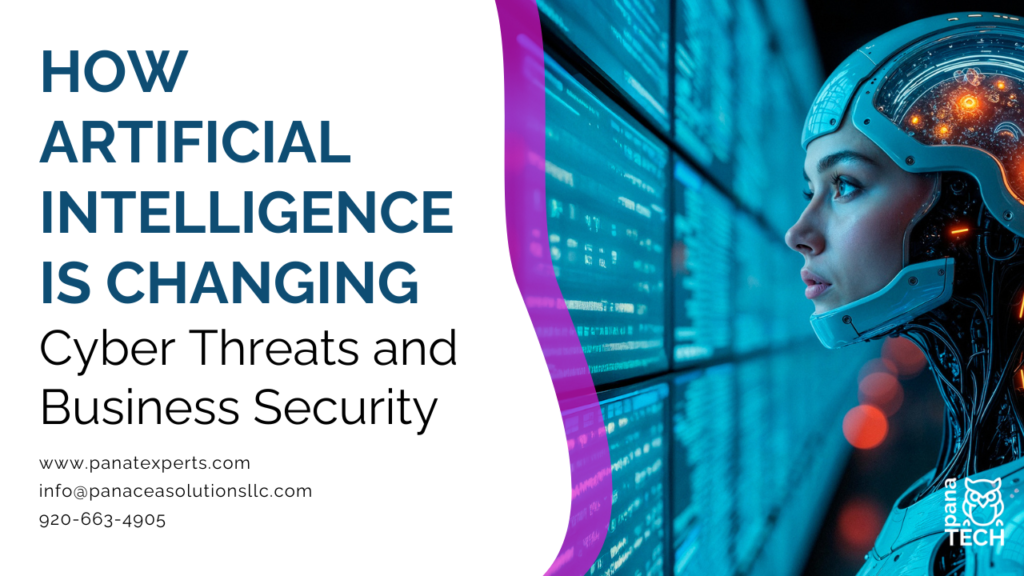
AI in cybersecurity is changing how businesses protect their systems—and how cybercriminals attack them. AI now sits on both sides of the fight, helping attackers move faster while giving security teams powerful tools to detect and respond to threats.
AI-powered cyberattacks jumped 72% year-over-year worldwide. Automated scanning tools now run about 36,000 scans every second, hunting for open doors into company systems. Nearly 9 out of 10 organizations, 87%, say they were hit by an AI-driven attack in the past year. Phishing has changed too, with more than 82% of phishing emails containing AI-generated content, making them harder to identify.
There’s good news too. AI-powered security tools can help organizations detect threats faster, automate responses, and reduce the potential impact of breaches. Companies that use AI and automation extensively in their security operations can significantly reduce breach costs and response times.
Read the blog to explore how AI in cybersecurity works, how it is changing cyber threats, and what businesses can do to strengthen their security.
The Growing Role of AI in Cyber Threats
A few years back, most cyberattacks needed real skill. Writing convincing phishing emails took effort. Building malware took time. Scanning a whole network for weak spots took a human hacker days or weeks.
AI has erased most of that effort. A criminal with almost no technical background can now use AI tools to write flawless phishing emails, clone a voice from a 30-second audio clip, or scan thousands of company systems in minutes. This is what security researchers call “lowering the skill floor.” The bar to become a cybercriminal has never been lower.
At the same time, big organized attack groups are using AI to scale up what they already do well. Instead of targeting one company at a time, they now run automated campaigns against hundreds of targets at once. They adjust each attack based on what they learn along the way.
In a recent industry survey, hyper-personalized phishing topped the list of concerns at 50%, followed closely by automated vulnerability scanning and adaptive malware. Despite all this, only 37% of organizations have a formal AI security policy in place. Even though 77% are already running AI tools somewhere in their security stack. That gap between adoption & governance is where a lot of the risk sits right now.
How Does Artificial Intelligence Work in Cyber Security?
AI security tools don’t work by magic. They follow a fairly simple loop, done at a scale no human team could match.
Data Collection
AI tools pull in huge amounts of data around the clock. This includes network traffic, user actions like logins and file access, and system logs from every device on the network. Nothing gets ignored because a person is too tired to check it.
Setting Baselines
Once the data starts flowing in, machine learning studies what “normal” looks like for each user and system. It learns your regular login times. It learns typical file sizes people download. It learns which devices usually talk to which servers. This baseline becomes the reference point for everything that follows.
Finding Outliers
Once the system knows what’s normal, it can spot what isn’t. A massive data download at 2 a.m. from a location the employee has never logged in from before? That gets flagged instantly. A regular office worker suddenly accessing financial servers they’ve never touched? Flagged too. This is far more sensitive than old rule-based systems, which only caught threats they already had a signature for.
Instant Action
The best part is speed. Once something suspicious is confirmed, the system doesn’t wait for a human to wake up and check email. It blocks a malicious IP address, lock a compromised account, or isolate an infected device within seconds. That speed is the difference between a minor incident and a full-blown breach.
Core Uses of AI in Security
Explore how AI can be used in cybersecurity.
Anomaly Detection
Old antivirus software worked off known virus signatures. If a threat wasn’t in the database, it slipped through. AI-based anomaly detection doesn’t need to recognize a specific virus. It just needs to notice behavior that doesn’t fit the pattern, which means it catches brand-new attacks that have never been seen before.
Phishing Defense
AI reads incoming emails the way a trained analyst would, but at a massive scale. It looks at tone, urgency, sender history, and subtle language patterns that suggest fraud. It flags a message even when the grammar is perfect and there’s no obvious red flag a spam filter would catch.
Code Scanning
Before software ever goes live, AI tools scan the code for weak points. This includes hidden backdoors, outdated libraries, or common coding mistakes that create entry points for attackers. Catching these issues before launch is far cheaper than fixing them after a breach.
Quick Reports
Security teams get buried in alerts. AI helps by turning raw technical data into plain-language summaries. Instead of scrolling through logs, a security analyst read a short report that says what happened, how serious it is, and what action is recommended.
How AI Changes Cyber Threats
Hyper-Realistic Phishing
Large language models write flawless emails in dozens of languages. They study a target’s writing style, job role, and even recent public posts to make messages feel personal. The broken English and odd formatting that used to give away a scam email are basically gone.
Deepfake Impersonation
Criminals now use AI-generated audio and video to mimic executives on calls and video meetings. Employees trained to spot suspicious emails aren’t always trained to question a video call that looks and sounds exactly like their CEO. The Arup case mentioned earlier shows exactly how costly this can get.
Automated Reconnaissance
Where a human hacker might spend days manually probing a network, AI tools now scan corporate systems and code repositories in minutes. They map out weak points and misconfigured settings before a human attacker even gets involved, handing over a ready-made list of targets.
Self-Learning Malware
Traditional antivirus software looks for known malware signatures. Newer AI-driven malware can rewrite parts of its own code to avoid detection, adapting each time it encounters a new environment. This makes signature-based defense far less reliable than it used to be.
How AI Changes Business Security
Here’s how businesses can leverage AI for enhancing their cyber security.
Behavioral Anomaly Detection
Just like on the threat side, defensive systems learn what normal looks like for every employee. A sudden strange download, an odd login time, or access to files a person has never touched before gets flagged right away, often before any damage is done.
Automated Incident Response
Security teams used to deal with alert fatigue, hundreds of notifications a day, most of them harmless. AI now prioritizes which alerts actually matter and can isolate a compromised device within seconds. This cuts down response time from hours to moments.
Predictive Threat Intelligence
Some platforms don’t just react. They scan global attack trends and forecast what kind of attack methods are likely to show up next. This gives security teams a head start, letting them patch weak spots before an attack method even reaches their industry.
Enhanced Cloud Monitoring
As businesses spread data across hybrid environments and cloud platforms like Microsoft’s security tools, AI keeps watch over all of it at once. It tracks who’s accessing what data, from where, and flags anything that looks like unauthorized access across the whole network, not just one system.
Conclusion
AI has changed cybersecurity into a race between two sides using the same technology. Attackers use it to write better phishing emails, fake executive voices, and scan networks faster than ever. Defenders use the same core technology to spot unusual behavior, respond in seconds, and predict what’s coming next.
The data backs this up. Breach costs are dropping where companies use AI defense well, but AI-driven attacks keep rising in both volume and cost. The businesses that come out ahead won’t be the ones that avoid AI. They’ll be the ones that adopt it carefully, pair it with real governance, and keep training their people alongside their tools. Technology alone won’t win this fight. It has to be paired with policy, oversight, and a workforce that knows what to watch for.
FAQs
Can AI actually stop cyberattacks or just detect them?
Both. Detection is the first step, but many modern AI security tools also take direct action. This may include blocking a suspicious IP address or shutting down access for a hacked account, without waiting for a human to respond.
What is a deepfake cyberattack?
It’s an attack where criminals use AI-generated audio or video to impersonate a real person. Usually an executive, to trick employees into transferring money or sharing sensitive information. A well-known case involved a $25 million loss after fraudsters faked a CFO on a video call.
Why is AI-generated phishing harder to detect?
Older phishing emails had bad grammar or awkward phrasing that made them easy to spot. AI tools now write in flawless, natural language and personalize messages to a specific target, removing most of the usual warning signs.
Does using AI in security actually save businesses money?
Yes, based on recent data. Organizations that used AI and automation extensively in their security operations saved close to $1.9 million per breach on average. It cut their breach lifecycle by 80 days compared to those that didn’t.
What is shadow AI, and why does it matter for security?
Shadow AI refers to employees using AI tools without approval from IT or security teams. Breaches linked to shadow AI take longer to detect and cost significantly more than standard breaches, partly because companies don’t know what data those tools are handling.
Is AI security only for large enterprises?
No. While large enterprises have adopted it fastest, AI-based security tools are increasingly built into standard business software, cloud platforms, and email systems. It makes them accessible to small and mid-sized businesses too.